
A central bank digital currency, or CBDC, is digital money issued directly by a country’s central bank. Unlike the cash in your wallet or the balance in your bank account, a CBDC exists purely in digital form — and the government backs every unit of it.
More than 130 countries are currently exploring, piloting, or launching CBDCs. Some see them as the future of money. Others worry they hand governments too much control over how people spend. Understanding what CBDCs actually are — and what they aren’t — helps you cut through the noise.
Key Takeaways
- CBDCs are government-issued digital money. They are legal tender, just like paper cash, but exist only in digital form.
- They are not cryptocurrency. CBDCs are centralized, controlled by governments, and not permissionless like Bitcoin or Ethereum.
- Three main types exist: retail CBDCs (for everyday people), wholesale CBDCs (for banks), and hybrid models.
- Over 130 countries are researching or developing CBDCs, with China, the Bahamas, and Nigeria already running live systems.
- Privacy is the biggest debate. CBDCs give governments visibility into transactions in ways that cash does not.
- They could replace cash or coexist alongside it, depending on the country’s design choices.
What Exactly Is a CBDC?
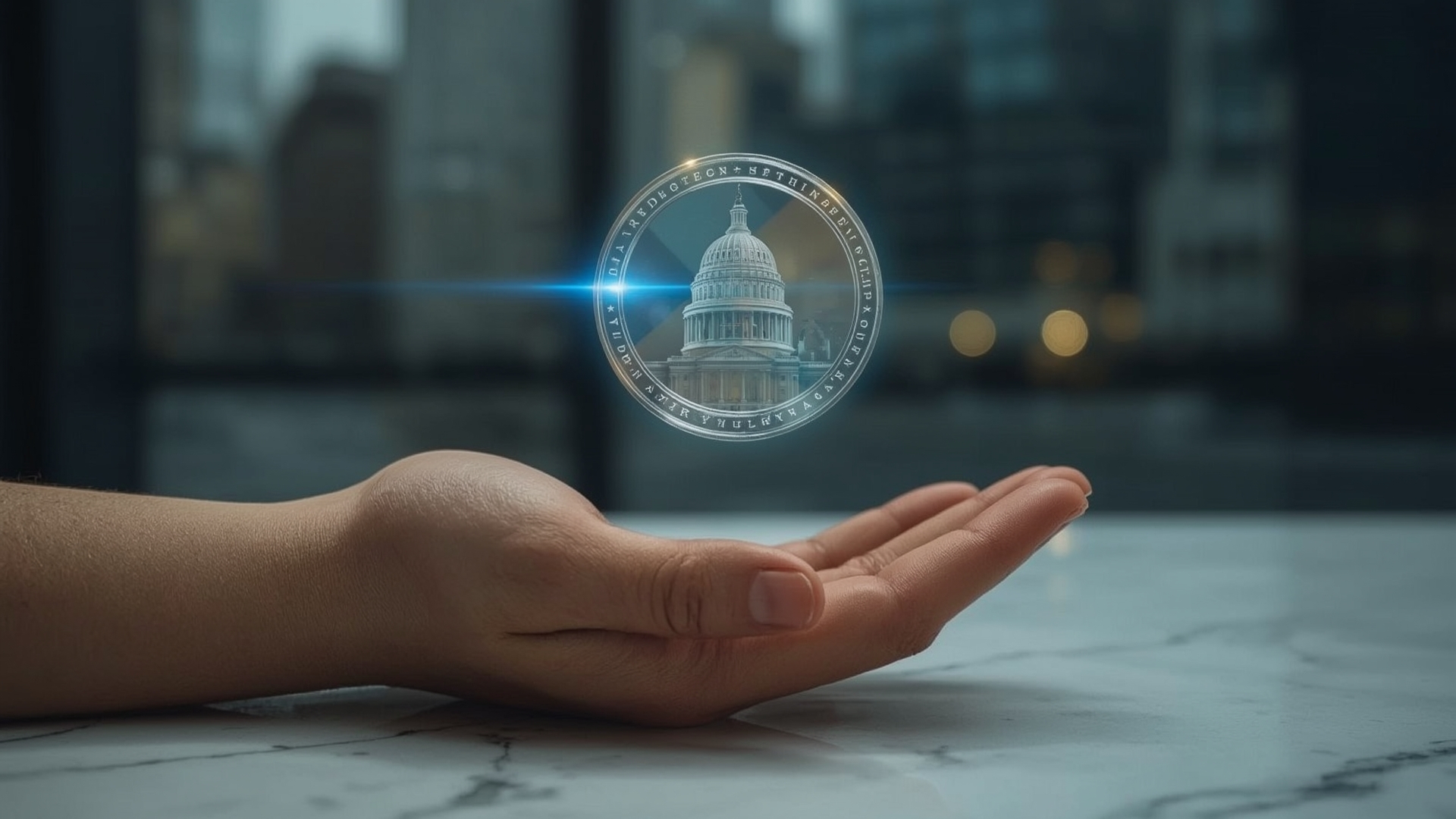
Quick Answer: A CBDC is digital currency created and controlled by a central bank. It works like electronic cash backed by the government. Unlike bank deposits, it is a direct liability of the central bank, meaning the government itself guarantees its value.
Think of a CBDC like a digital version of a dollar bill. The paper bill in your pocket is issued by the government and has value because the government says it does. A CBDC works the same way — except it lives on a digital ledger instead of in your hand.
This is different from the money sitting in your checking account. Your bank balance is technically a liability of your bank, not the government. If your bank fails, your deposits are only protected up to FDIC insurance limits. A CBDC, by contrast, is a direct obligation of the central bank itself. There is no bank failure risk.
CBDCs also differ from payment apps like Venmo or PayPal. Those apps move existing dollars around. A CBDC is the dollar — just in digital form from the start.
What Makes CBDCs Different From Regular Digital Money?
Your debit card already lets you spend digitally. So why do CBDCs matter?
Today’s digital money runs through a chain of private banks, payment processors, and networks. Each step adds cost and delay. A CBDC cuts out the middlemen. The central bank sends digital currency directly to users or institutions, which makes transactions faster and potentially cheaper.
CBDCs can also be programmed. A government could design a CBDC that expires after 90 days, pushing people to spend it rather than hoard it. Or it could restrict CBDC payments to approved merchants. That programmability is both the technology’s power and its most controversial feature.
What Are the Three Types of CBDCs?
Quick Answer: The three types are retail CBDCs (used by everyday people), wholesale CBDCs (used between banks and financial institutions), and hybrid CBDCs (a mix of both). Most countries are focusing on retail designs for public use.
| Type | Who Uses It | Primary Purpose | Example | Privacy Level |
|---|---|---|---|---|
| Retail CBDC | General public | Everyday payments, replace cash | China’s Digital Yuan (e-CNY) | Low to moderate |
| Wholesale CBDC | Banks and financial institutions | Interbank settlements, reduce costs | Project mBridge (BIS pilot) | Moderate to high |
| Hybrid CBDC | Public + private intermediaries | Balance government control with bank distribution | EU Digital Euro (proposed) | Designed with privacy tiers |
How Does a Retail CBDC Work in Practice?
A retail CBDC works through a digital wallet — either an app on your phone or a physical card. The central bank either issues currency directly to your wallet or routes it through a licensed bank or payment provider.
You load funds, spend at merchants who accept it, and receive payments like any other digital payment system. The key difference is that the money is government-issued at every step, not a private bank’s IOU.
What Is a Wholesale CBDC Used For?
Wholesale CBDCs stay behind the scenes. Banks use them to settle large transactions between each other, typically processes that currently take 1-3 business days through legacy systems like SWIFT.
With a wholesale CBDC, those same settlements can happen in seconds. Cross-border payments — which currently cost banks 2-5% in fees — could drop dramatically. That’s the main draw for the financial industry.
Which Countries Have Already Launched CBDCs?
Quick Answer: As of April 2026, China, the Bahamas, Jamaica, Nigeria, and several Eastern Caribbean nations have live retail CBDCs. Over 130 countries are in research, pilot, or development stages, including the United States, European Union, United Kingdom, and India.
| Country | CBDC Name | Status | Launch Year | Population Covered |
|---|---|---|---|---|
| China | Digital Yuan (e-CNY) | Live (expanded rollout) | 2020 (pilot), 2022 (expanded) | 260+ million users tested |
| Bahamas | Sand Dollar | Live | 2020 | ~400,000 residents |
| Nigeria | eNaira | Live | 2021 | 200+ million population |
| Jamaica | JAM-DEX | Live | 2022 | ~3 million residents |
| European Union | Digital Euro | Preparation phase | 2026-2028 (projected) | 340+ million EU citizens |
| United States | Digital Dollar (unofficial) | Research/exploration | No launch date set | 330+ million citizens |
| India | Digital Rupee (e₹) | Pilot ongoing | 2022 (pilot launched) | Selected cities and banks |
What Is China’s Digital Yuan and Why Does It Matter?
China’s e-CNY is the most advanced large-economy CBDC in existence. It runs through major Chinese banks and payment apps, including WeChat Pay and Alipay. By 2023, the People’s Bank of China reported over 13.6 trillion yuan in cumulative transactions during testing phases.
The Digital Yuan matters globally for two reasons. First, it gives China a way to conduct international trade without going through the U.S. dollar-dominated SWIFT system. Second, it shows other central banks what a large-scale CBDC rollout actually looks like in practice.
Where Does the U.S. Stand on a Digital Dollar?
The U.S. has been cautious. The Federal Reserve has researched CBDC design, and MIT’s Project Hamilton completed technical feasibility studies. However, significant political opposition exists, particularly around privacy concerns.
In 2024, legislation was introduced to ban the Federal Reserve from issuing a retail CBDC without explicit Congressional approval. As of April 2026, no launch date has been announced. The U.S. position remains “research and observe” rather than “build and deploy.”
How Are CBDCs Different From Cryptocurrency?
Quick Answer: CBDCs are centralized, government-controlled, and stable in value. Cryptocurrencies like Bitcoin are decentralized, not controlled by any authority, and their prices fluctuate. They share digital form but almost nothing else.
| Attribute | CBDC | Bitcoin (BTC) | Ethereum (ETH) |
|---|---|---|---|
| Issuer | Central bank / government | No issuer (algorithmic) | No issuer (algorithmic) |
| Control | Centralized | Decentralized | Decentralized |
| Price Stability | Stable (pegged to fiat) | Volatile (market-driven) | Volatile (market-driven) |
| Anonymity | Low to none | Pseudonymous | Pseudonymous |
| Permissioned? | Yes (government approval required) | No (open access) | No (open access) |
| Transaction Reversibility | Possible (government can freeze/reverse) | Irreversible | Mostly irreversible |
| Legal Tender | Yes | No (except El Salvador) | No |
Are CBDCs Similar to Stablecoins?
CBDCs and stablecoins both aim to keep a stable value, but they come from opposite directions. Stablecoins like USDC and USDT are issued by private companies. They’re backed by reserves — typically U.S. Treasury bonds or cash equivalents — but no government guarantees them.
A CBDC is the government’s own digital money. There’s no private company involved, no reserve audit to worry about, and no issuer risk. The government simply declares it legal tender and backs it with its full authority.
The practical difference: if the company behind a stablecoin collapses, the stablecoin could lose its peg. If the central bank behind a CBDC fails — which is essentially impossible in developed economies — the CBDC fails. That’s a much higher bar of security.
What Are the Privacy Concerns Around CBDCs?

Quick Answer: CBDCs let governments track every transaction in real time. Unlike cash, which is anonymous, a CBDC creates a permanent digital record of what you bought, when, where, and from whom. This raises serious surveillance and financial control concerns.
This is the biggest debate in the CBDC conversation. Cash is private by design. When you hand someone $20, no record exists unless both parties create one. A CBDC cannot replicate that anonymity. Every transaction runs through a ledger the central bank controls.
Critics argue this gives governments tools they’ve never had before. A government could freeze a citizen’s CBDC wallet without going through a bank. It could restrict spending to approved vendors. In extreme cases, it could program money to expire or to only be used for certain categories of goods.
What Privacy Protections Are Being Built Into CBDCs?
Some central banks are building privacy tiers into their designs. The European Central Bank, for example, has proposed an “anonymity voucher” system for the Digital Euro. Small everyday purchases would have limited traceability, while larger transactions would require identity verification.
The Bank for International Settlements (BIS) has published design frameworks where transaction data is separated from identity data and held by different parties. This creates what’s called a “privacy-preserving architecture” — the central bank can see aggregate flows without seeing individual identities in every case.
The reality is that no CBDC design offers privacy equivalent to physical cash. Every proposal involves tradeoffs between privacy and anti-money-laundering compliance.
Could a Government Use a CBDC to Control Spending?
Yes, technically. That’s exactly what critics fear. The programmable nature of CBDCs means governments could embed spending rules directly into the currency itself.
This isn’t hypothetical. China’s e-CNY has been tested with expiry dates on certain government-distributed amounts. That forces recipients to spend rather than save. Other theoretical uses include geographic restrictions (the CBDC only works within national borders) or category restrictions (can only be spent on food, housing, or approved goods).
No democratic government has announced plans to use CBDCs this way. But the technical capability exists, and that’s enough to fuel legitimate concern.
What Are the Potential Benefits of CBDCs?
Quick Answer: CBDCs can reduce payment costs, speed up cross-border transfers, bring unbanked populations into the financial system, and give governments better tools for monetary policy. The Bahamas and Nigeria launched theirs specifically to improve financial inclusion.
How Could CBDCs Help People Without Bank Accounts?
About 1.4 billion adults globally are unbanked, meaning they have no access to traditional banking services. Many live in countries with unstable banking infrastructure or in rural areas with no bank branches.
A CBDC only needs a smartphone or a basic digital wallet to work. No bank account required. No minimum balance. No monthly fees. Countries like the Bahamas launched the Sand Dollar specifically because remote islands had poor banking access. Residents could hold and spend government-backed digital money without needing a bank branch.
How Do CBDCs Speed Up Cross-Border Payments?
International wire transfers currently take 1-5 business days and cost 2-7% in fees. A lot of that cost comes from the network of correspondent banks each transaction must pass through.
Wholesale CBDCs can settle cross-border payments directly between central banks in seconds. Project mBridge, a joint pilot between China, Hong Kong, Thailand, the UAE, and the BIS, demonstrated real-time cross-border settlements in 2022. Transactions that previously took days settled in under two minutes.
What Are the Risks and Downsides of CBDCs?
Quick Answer: The main risks include bank disintermediation (people moving money from banks to CBDCs, destabilizing the banking system), cyberattack vulnerability, government overreach through programmable money, and financial exclusion for people without smartphones or internet access.
What Is Bank Disintermediation and Why Does It Matter?
Bank disintermediation is when people pull money out of commercial banks and move it somewhere else. If a CBDC is seen as safer than a bank deposit — which it technically is, since it’s a government liability — millions of people might move their savings into CBDC wallets.
That would shrink the deposit base banks rely on to make loans. Less deposit funding means less lending, which slows economic activity. Most central banks are addressing this by capping how much CBDC a single person can hold — typically in the range of €3,000 for the proposed Digital Euro — to prevent large-scale bank runs.
What Cybersecurity Risks Come With a CBDC?
A national CBDC system becomes critical infrastructure, similar to the power grid or water supply. A successful cyberattack could disrupt the entire payment system of a country.
Unlike decentralized cryptocurrencies — where attacking the network means attacking thousands of independent nodes — a CBDC has centralized points of failure. Central banks are aware of this. CBDC infrastructure requires military-grade security, redundant systems, and offline fallback mechanisms.
How Would a CBDC Actually Work in Daily Life?
Quick Answer: You’d use a government-issued digital wallet app. You could receive your paycheck in CBDC, pay at stores via QR code or tap-to-pay, send money to friends instantly, and access your balance 24/7. It works like a payment app, but the money itself is government-issued.
What Does a CBDC Wallet Look Like?
Most CBDC pilots use smartphone apps that look similar to PayPal or Cash App. China’s e-CNY app integrates with existing super-apps like WeChat and Alipay. Users see a balance, a QR code for receiving payments, and a payment flow for sending money.
Some designs include a physical card option for people without smartphones. Nigeria’s eNaira added an offline feature allowing USSD-based transactions (text-message-style payments) for users without internet access.
Would CBDCs Replace Cash Entirely?
Most central banks say no — at least not immediately. The stated goal is to complement cash, not replace it. Sweden’s Riksbank, which has been researching the e-krona for years, explicitly says cash will remain available.
The long-term trajectory is less clear. As cash usage continues declining globally — Sweden already has some stores that refuse cash — the pressure to maintain expensive cash infrastructure will grow. CBDCs could eventually become the default, with cash as a legacy option for those who need it.
What Is the Geopolitical Significance of CBDCs?

Quick Answer: CBDCs could reshape the global financial order. China’s Digital Yuan is explicitly designed to reduce dependence on the U.S. dollar and bypass SWIFT sanctions. If widely adopted in trade, it could challenge dollar dominance in international finance.
How Does the Digital Yuan Challenge the U.S. Dollar?
The U.S. dollar is the world’s reserve currency. Most international trade — oil, commodities, goods — is priced and settled in dollars. This gives the U.S. enormous geopolitical power, including the ability to sanction countries by cutting them off from SWIFT, the global bank messaging network.
China’s Digital Yuan, combined with platforms like mBridge, offers an alternative settlement system that doesn’t touch SWIFT. Countries under U.S. sanctions could theoretically trade with China in e-CNY without needing the dollar system at all. This is why U.S. policymakers watch China’s CBDC rollout closely.
How Are International Organizations Shaping CBDC Standards?
The Bank for International Settlements acts as the central bank for central banks. It has published extensive guidelines on CBDC design, interoperability, and governance. The BIS Innovation Hub runs pilots including mBridge and Project Dunbar (multi-CBDC cross-border payments).
The International Monetary Fund (IMF) has also pushed for interoperability standards — meaning CBDCs from different countries should be able to communicate with each other. Without common standards, you’d end up with dozens of isolated CBDC systems that can’t transact across borders, defeating one of the core purposes.
Frequently Asked Questions About CBDCs
Is a CBDC the same as digital money I already use?
No. The money in your bank account is a private bank’s liability. A CBDC is a direct liability of the central bank itself. It’s government money in digital form, not a private institution’s digital record of your deposits.
Can the government freeze my CBDC wallet?
Technically, yes. A CBDC system gives governments the ability to freeze or restrict wallets without going through a commercial bank. Whether this power is used depends on the laws and governance rules each country builds around its CBDC.
Will CBDCs replace cash?
Most central banks say CBDCs will complement cash, not replace it. However, as physical cash use declines globally, CBDCs may eventually become the primary form of money in many countries.
Do CBDCs use blockchain technology?
Some do, some don’t. China’s e-CNY uses a centralized ledger, not a blockchain. Other designs, like the Bahamas Sand Dollar, use distributed ledger technology (DLT), which shares some characteristics with blockchain. The specific technology varies by country and design goals.
How are CBDCs different from PayPal or Venmo?
PayPal and Venmo move existing bank deposits between accounts. A CBDC is the underlying money itself, issued directly by the government. Think of it as the difference between moving gold versus holding the gold directly.
What happens to my CBDC if there’s a cyberattack?
This is an active area of CBDC design. Most frameworks include offline backup mechanisms, redundant servers, and recovery protocols. Governments treat CBDC infrastructure as critical national infrastructure, similar to the power grid, and invest accordingly in security and resilience.